
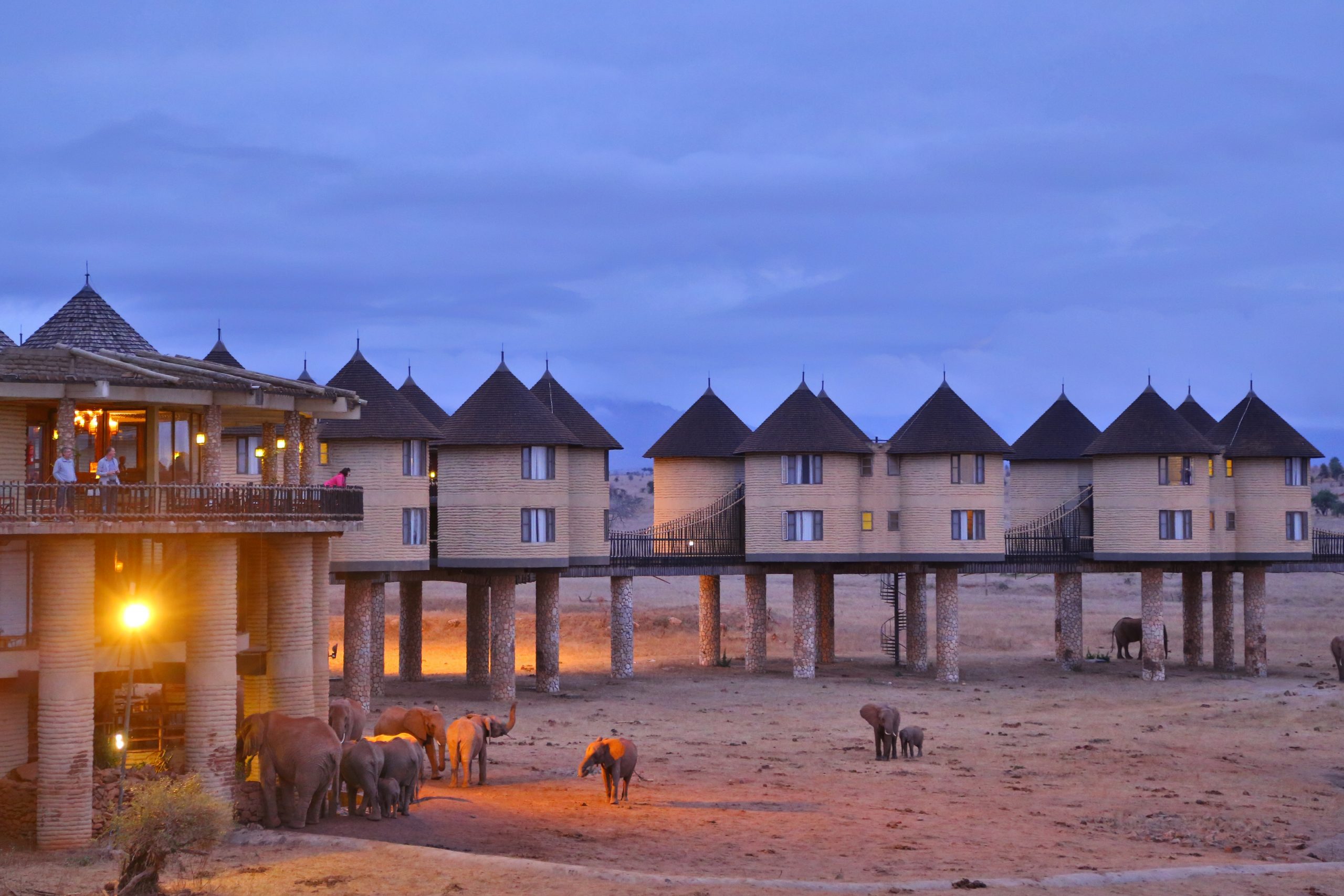
Salt Lick Safari Lodge is a luxurious safari escape set in the heart of the Taita Hills Wildlife Sanctuary, overlooking a waterhole next to Tsavo West National Park. The lodge offers a unique and immersive Safari experience. It is 383 Km from Nairobi and 200 km from Mombasa. A one-hour flight from Nairobi’s Wilson Airport to Mombasa is approximately 30 minutes.
Accommodation and facilities.
Salt Lick Safari Lodge features 96 unique rooms, all elevated on stilts and situated across two levels. Each room is equipped with an en-suite bathroom, complete with a permanent shower and WC, as well as hot and cold running water. Guests can be accommodated in these rooms, available at three levels, with double, twin, or triple beds, depending on your preferred occupancy. Guests in these lodges enjoy uninterrupted views of the waterholes and surrounding landscapes. The lodges are arranged in a manner that allows guests to witness a variety of wildlife, including elephants and buffaloes, as they visit the waterholes throughout the day.

Dining and cuisine.
Salt Lick Lodge has a main restaurant, Bura Restaurant, that offers international cuisine with options for al fresco dining. The restaurant also serves buffet menus with both international and local cuisines. It has a capacity of 150 people with live cooking counters preparing specialty dishes. Vegans are also prepared upon request. The Vuria Bar Lounge provides a relaxed setting to enjoy drinks while observing wildlife. It offers spectacular views of the main waterhole and surrounding grasslands. It features experiential dining, complete with a wild open setting, including bush breakfasts and picnic hampers.

Safari and Wildlife Experience.
The lodge is situated near a waterhole, which attracts a diverse range of wildlife and various bird species. When the animals arrive, guests enjoy the excellent view from their rooms. Day and Night game drives within the surrounding Tsavo West National Park allow for enjoying the beautiful views of the ‘red elephants’ and an abundant birdlife population. The lodge’s elevation minimizes disturbance to wildlife, allowing guests to observe animals moving freely across the landscape.
Related Safari Packages
6 Days-Kenya Safari Experience
8 Days-Kenya Big Five Ultimate Safari
6 Days Ol Pejeta, Lake Nakuru, and Masai Mara Safari

Cultural and Recreational Activities.
To experience traditional village life, guests can visit neighboring Taita settlements. Through their practices, music, dance, and crafts, these visits provide an understanding of the indigenous people’s culture, customs, and everyday lives. After a full day of safari activities, the lodge’s swimming pool is the perfect spot to cool off. The pool is a terrific place to unwind and relax, offering a serene setting with stunning views of the surroundings. Visitors can enjoy a sundowner experience in the evening, which includes savoring snacks and beverages while taking in the breathtaking African sunset. The beautiful vista of the plains below and the Taita Hills provide the ideal setting for a tranquil day’s finish. The lodge can arrange unique photography safaris, where experts guide visitors in capturing breathtaking images of people, animals, and landscapes. These safaris offer excellent opportunities for you to enhance your photography skills and create lifelong memories, regardless of your level of experience.
Conservation and sustainability.
The Taita Hills Wildlife Sanctuary, which aims to protect critical wildlife pathways and habitats, is located near Salt Lick. By encouraging coexistence between local communities and wildlife, the sanctuary helps reduce human- wildlife conflict and offers a home to endangered species, such as the African wild dog. In the Salt Lick region, eco-tourism also serves as a platform for environmental education, promoting awareness of the importance of sustainability and wildlife preservation. Long-term conservation objectives can be supported by Salt Lick tourism through the promotion of ethical wildlife safaris and environmentally friendly accommodations.
Rates and Booking Information.
One can make an online booking or via a travel agent.
How To Get There.
Salt Lick Tsavo Lodge is set in the heart of the Taita Hills Wildlife Sanctuary, overlooking a waterhole next to Tsavo West National Park. There are two ways to reach there;
1. By Road.
It is approximately 355 km from Nairobi, with a duration of 6 hours, depending on the road conditions. The route commonly used is Nairobi-Voi, passing through the Taita Hill Wildlife Sanctuary Gate. A 4*4 vehicle is highly recommended.
2. By air.
Flight details.
Airlines such as Safari Link, Air Kenya, and Mombasa Air Safari offer daily flights from Nairobi’s Wilson Airport. The flight to Voi Airstrip is the most appropriate. Upon arrival, Salt Lick Tsavo Lodge provides a complimentary transfer in a 4*4 safari vehicle.
Which Option to Choose?
Fly if you prefer comfort, less travel time, and scenic aerial views of the Mara.
Drive if you want a road-trip adventure and flexibility
Conclusion.
Salt Lick Tsavo’s conservation and sustainability initiatives provide an excellent example of the complex interrelationships among wildlife preservation, ecological protection, and sustainable development. The area serves as a shining example of how conservation can benefit both local residents and biodiversity through extensive programs, including habitat restoration, sustainable tourism, community engagement, and wildlife protection. But issues like poaching, climate change, and conflict between people and wildlife continue to pose a threat.
Faqs.
What is Salt Lick Tsavo?
Salt Lick Tsavo is a region within Tsavo National Park, one of the largest national parks in Kenya. It is renowned for its rich wildlife, particularly elephants, rhinos, and a diverse array of bird species. The area is famous for its natural salt licks, which attract a diverse variety of wildlife and serve as vital water sources.
How can people contribute to conservation in Salt Lick Tsavo?
People can contribute by supporting ecotourism, donating to wildlife conservation organizations, and raising awareness about the importance of protecting ecosystems. Additionally, individuals can adopt sustainable practices in their daily lives, such as reducing their carbon footprint and supporting ethical, environmentally conscious businesses.
What are the biggest challenges to conservation in Salt Lick Tsavo?
The main challenges include poaching, human- wildlife conflict, and the impact of climate change. Despite efforts to protect wildlife, illegal hunting still poses a significant threat. As the human population grows, the demand for land and resources increases, potentially leading to conflicts with wildlife.
